If you have ever watched a skilled player run the table effortlessly, you already know there is something going on beyond just pocketing balls. Every shot is calculated. Every cue ball movement is intentional. That invisible force behind every move is called pool position play, and it is arguably the most important skill you will ever develop as a billiards player.
Whether you are a casual player who loves weekend games or someone chasing serious improvement, understanding pool position play will completely change the way you approach every single rack. This guide covers everything from the basic concept to advanced techniques so you can start thinking like a real player.
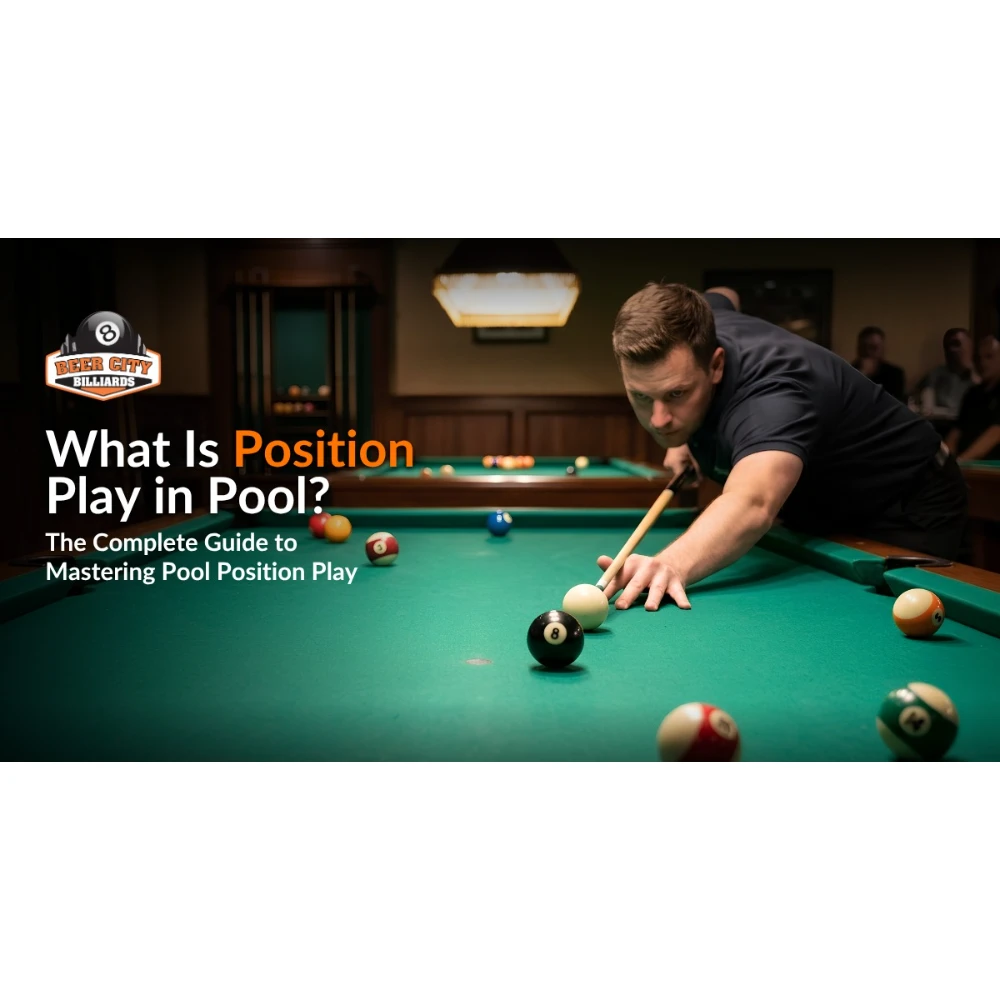
Pool position play is the art of controlling where the cue ball ends up after each shot. Instead of just focusing on sinking a ball into a pocket, a skilled player is always planning the next shot, and the shot after that. You are essentially choreographing the movement of the cue ball across the table so that you are always left with an easy, favorable angle on your next target ball.
Think of it like a chess game. A beginner only sees the move in front of them. An experienced player sees three, four, or even five moves ahead. That forward thinking is at the core of position play billiards.
Every time you strike the cue ball, you have a choice: let it go wherever it pleases, or control it with purpose. Pool position play is choosing purpose every single time.
Here is a truth that surprises many new players: pocketing a ball is actually the easier part of the game. What separates good players from great players is not their ability to make difficult shots. It is their ability to make every shot look easy by always leaving themselves in the right spot.
When your pool position play is dialed in, you are rarely forced into tough angles, long stretch shots, or situations where you have to kick off a rail just to reach your ball. You flow through a rack smoothly, one shot feeding naturally into the next, because you planned it that way from the very first stroke.
Without position play billiards fundamentals, even talented players leave themselves in difficult situations constantly. They pocket one ball, only to find the cue ball has rolled into a cluster of balls, or snookered itself behind an opponent’s ball. Good shot making alone cannot save you from poor cue ball control.
Understanding pool position play starts with understanding that you do not need to place the cue ball in one perfect, precise spot. Instead, think in terms of zones. There are three zones of control every player should know:
The Ideal Zone: This is the sweet spot. The area of the table where you have a comfortable angle, the right distance, and a clear path to the next ball. Every position play decision should be aimed at landing here.
The Acceptable Zone: Not perfect, but workable. You can still make the next shot from here without too much difficulty. A bit more English or a longer shot might be required, but the run is not broken.
The Danger Zone: Landing here usually means trouble. You are either too close, too far, behind a problem ball, or stuck with a bad angle. Good pool position play is mostly about avoiding this zone at all costs.
Training yourself to think in zones rather than exact spots reduces pressure and makes position play billiards much more achievable, especially at the intermediate level.
There are several practical techniques that form the foundation of strong pool position play. Mastering these individually, then combining them, is how you build real control over the cue ball.
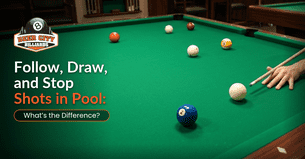
These three shot types are the building blocks of cue ball control. A follow shot, where you strike the cue ball above center, sends it rolling forward after contact. A stop shot, struck dead center, causes the cue ball to stop almost exactly where it hit the object ball. A draw shot, struck below center, pulls the cue ball back toward you after contact.
Knowing when to use each one based on where you need the cue ball to end up is the heart of pool position play.
Rails are your best friends in pool position play. Using one or two rails to redirect the cue ball to your desired zone gives you far more control than trying to get there in a straight line. Most professional players plan shots that use at least one rail as part of their cue ball path. It is more predictable, more controlled, and opens up far more options across the table.
Angle is everything in position play billiards. Cutting a ball at the right angle allows the cue ball to naturally travel toward your next target. Cutting too thin sends the cue ball one direction. Too thick, and it goes another. Learning to consistently read and use angles correctly takes time but is absolutely worth developing early.
This is where a huge number of players struggle. You might know exactly where you want the cue ball to go, but if you hit the shot too hard or too soft, it will end up somewhere completely different. Speed control is what makes pool position play consistent. Low speed shots are more predictable. High speed shots introduce spin, rail bounce, and unpredictability. Developing a feel for the right amount of force is a lifelong practice, but it is critical to consistent position play.
One of the habits that distinguishes intermediate players from advanced players is that advanced players plan the entire rack before they shoot the first ball. This is called “pattern play,” and it works hand in hand with pool position play.
Before breaking out your shot, walk around the table. Identify the problem balls, the clusters, and the balls near the pockets. Then ask yourself: what order do I need to shoot these in so that the cue ball naturally flows from one to the next? Which balls give me a free path to the next one? Which ones require careful positioning?
Planning the run in advance means you are never shooting reactively. You always know why you are shooting a particular ball, and you know where you need the cue ball to go afterward. This is the mindset of a player who has truly embraced position play in billiards.
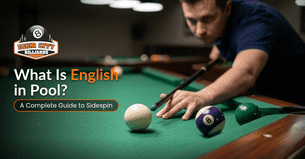
English, also called side spin, is an advanced tool in the pool position play toolkit. By striking the cue ball slightly left or right of center, you can alter how it bounces off rails, change its final direction, and even influence how it transfers energy to the object ball.
Using English correctly gives you the ability to redirect the cue ball to areas of the table that would be otherwise unreachable with pure follow, stop, or draw shots. However, English also introduces complexity. Miscue risks go up. Squirt (the cue ball veering off in a slightly different direction than aimed) becomes a factor. Rail throw can affect your position.
Because of this, most instructors recommend building a strong foundation with center ball shots and natural position play, billiards principles before incorporating heavy English into your game. Use it as a tool to expand your options, not as a crutch to fix a poor position.
Even players who understand position play billiards conceptually make these mistakes regularly. Knowing them can save you a lot of frustration.
Shooting too hard is the most common mistake. Speed kills position. The harder you hit, the less predictable the cue ball’s final resting place becomes. Train yourself to use only the speed necessary to get the job done.
Neglecting the long game is another major issue. Players who only think one shot ahead constantly box themselves into poor positions. Think at least two or three shots ahead at all times.
Ignoring cue ball placement when playing safe is a mistake that costs even experienced players games. If you cannot run out, leave the cue ball somewhere your opponent struggles to work with. Position play is not just offensive. It has a strong defensive dimension too.
Over-relying on difficult shots instead of repositioning the cue ball with an easier shot beforehand is a sign of underdeveloped position play. If you find yourself regularly attempting heroic shots, your position play needs work.
Reading about pool position play is only the starting point. Real improvement comes from deliberate practice. Here are a few drills that target cue ball control directly.
The stop shot drill involves placing the cue ball and an object ball about two feet apart in a straight line to a corner pocket. Practice making the stop shot perfectly from different distances. This builds feel and consistency for center ball striking.
The line drill requires placing five or six balls in a line across the table and running them in order while keeping the cue ball on one side of the center line. This forces you to practice controlling angle and speed shot after shot.
The position box drill has you mark a small area on the table with chalk or coins and practice getting the cue ball to land within that box after each shot from various positions. Start with a large box and shrink it as your control improves.
These drills are simple but powerful. Consistent repetition of these fundamentals builds the muscle memory and instincts that make pool position play automatic over time.
Pool position play does not exist in a vacuum. It connects directly to your break strategy, your safety play, and how you manage problem balls throughout a rack. A strong break that opens the table nicely makes position play easier because the balls are spread and accessible. A bad break that leaves clusters and blocked pockets forces you into more complex positional decisions.
Developing a complete game means thinking about position play from the very first contact of the game and never stopping. Even on your last ball before the eight, your pool position play should be setting you up for a comfortable, confident eight ball shot.
If you are looking to deepen your skills and learn more about how strategy connects across different aspects of billiards, our guide on billiards fundamentals is a great place to start.
For players specifically interested in the break shot and how it affects your positioning opportunities throughout a rack, check out our breakdown of the best break strategies for both eight ball and nine ball.
And if you want to see how equipment choices can affect your ability to control the cue ball, our cue selection guide walks you through what to look for in a cue for better feel and control.
It is worth noting that position play billiards looks different depending on where you are in your development.
As a beginner, your goal is simply to start thinking about the cue ball’s destination after each shot. Even if your execution is not perfect yet, building the habit of asking “where do I want the cue ball to go?” before every shot is a game changer. Do not try to master everything at once. Focus on stop shots and natural angles first.
At the intermediate level, you start incorporating speed control, rail usage, and basic pattern planning into your game. You will begin to notice when you have good position and when you do not, and you will start making decisions based on position rather than just trying to pocket balls.
Advanced players make position play billiards look effortless because they have internalized everything above to the point where they are doing it automatically. They are always thinking two to four shots ahead, they manage the entire table as a system, and their cue ball control is consistent enough to execute their plan with reliability.
No matter where you are on that spectrum, improvement is available, and it starts by committing to pool position play as a priority.
Pool position play is the difference between a player who makes impressive individual shots and a player who wins. It transforms how you see the table, how you plan your shots, and how you think about every moment of every game. It is not a technique you learn once and then stop developing. It is a practice you refine forever.
Start simple. Think about the cue ball. Ask where you want it to go before every single shot. Practice your stop shots, your draw shots, and your follow shots until they feel second nature. Plan two shots ahead, then three, then four. Walk the table before you shoot.
When you invest in position play billiards fundamentals, every other part of your game improves along with it. The pockets seem bigger. The runs feel longer. The game feels smoother.
And if you want a great place to put all of this practice to work, come visit us at Beer City Billiards where great tables, great atmosphere, and great competition are always waiting for you.