
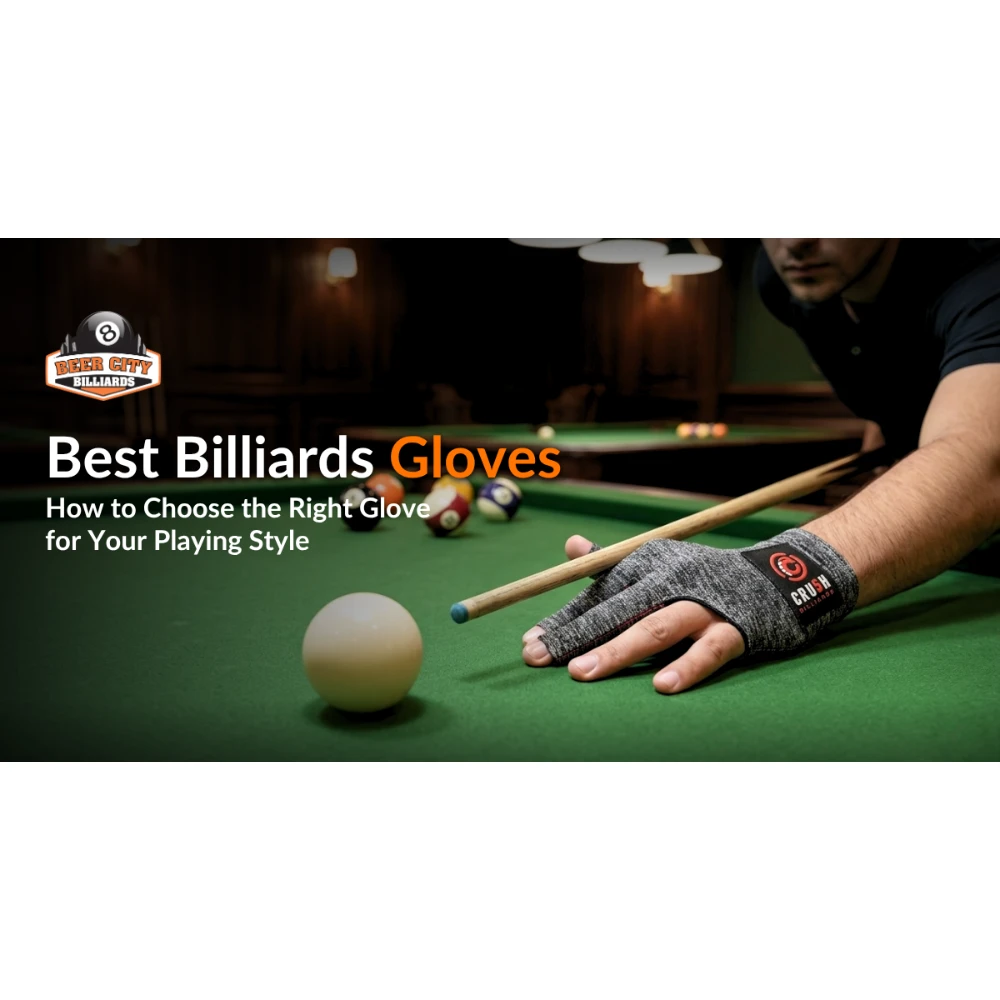
Every serious pool player eventually faces the same question at the table: should I be wearing a glove? And if so, which one? The answer is not as simple as picking up the first pair you see. The right glove can genuinely transform your game, while the wrong one can feel like a distraction you never asked for.
In this guide, we break down everything you need to know about the best billiards gloves available today, how to match one to your specific playing style, and what to look for before spending a single dollar. Whether you play casually on weekends or compete in organized leagues and tournaments, there is a glove out there built for the way you play.
There was a time when wearing a pool glove raised eyebrows in the billiard hall. Old-school players saw it as a crutch. That attitude has changed dramatically. Today, top professionals, including Shane Van Boening, Skylar Woodward, Francisco Sanchez Ruiz, and Earl Strickland, all use billiard gloves to improve consistency and maintain a smoother stroke at the table.
The science behind it is simple. When your bridge hand gets sweaty or oily, the cue shaft drags instead of gliding. That drag introduces micro-inconsistencies into your stroke, and over the course of a long session or match, those tiny variations add up. A billiards glove eliminates that friction and gives the cue a clean, consistent path through your fingers every single time.
Beyond performance, gloves also protect your cue. Oils and moisture from bare hands can build up on the shaft over time, degrading the finish and affecting how smoothly the cue moves. A glove creates a barrier between your skin and the equipment, preserving both.
The bottom line is that the best billiards gloves are not accessories for weak players. They are tools used by professionals who understand that every variable matters when the game is on the line.
Most players wear their glove on the bridge hand, which is the hand that guides and supports the cue shaft. For right-handed players, that is the left hand. For left-handed players, it is the right hand. The shooting hand, which pulls the cue back and drives it forward, generally does not wear a glove because it needs direct tactile feedback from the grip end of the cue.
The glove’s job is to create a smooth, low-friction surface where the shaft rests and travels through your fingers. Most gloves cover three fingers at a minimum: the index finger, middle finger, and ring finger, since these are the primary contact points on the cue shaft during most bridge formations. Some gloves cover all four fingers and the thumb for maximum coverage.
When you use a quality glove, the cue glides forward and back with almost no resistance. Your stroke becomes more repeatable because you are no longer fighting against unpredictable grip changes caused by sweat, humidity, or dry skin. The result is better accuracy, better spin control, and less fatigue during long sessions.
Before you can find the best billiards gloves for your game, you need to understand what types are available and what each one is designed to do.
These are the most popular styles on the market. They cover the index, middle, and ring fingers while leaving the pinky and thumb free. The design works well for most bridge styles and gives a natural feel because your fingertips and thumb retain full sensation. If you play with a standard closed bridge or a pencil bridge, a three-finger glove is almost always the right starting point.
Full gloves cover all four fingers and typically include a thumb opening or partial thumb cover. They are ideal for players who prefer a looser, more open bridge or those who simply want maximum cue glide across the entire hand surface. Full coverage gloves are also popular in extremely humid environments where even minimal skin contact can cause stickiness.
Some gloves feature open fingertips, which allow the very tips of the fingers to remain exposed. This style appeals to players who want the glide benefits of a glove without sacrificing tactile feedback at the contact points. If you rely on the subtle feel at the fingertips to judge cue angle and elevation, open fingertip gloves are worth exploring.
Beyond finger coverage, gloves also vary in how tightly they conform to the hand. Compression-style gloves feel like a second skin and are popular with tournament players who want zero excess fabric interfering with the cue. Relaxed-fit gloves are more forgiving on sizing and tend to suit recreational players who prioritize comfort over a performance-grade snugness.
The fabric a glove is made from directly affects how comfortable it is during long sessions. The best billiards gloves use breathable, moisture-wicking materials that pull sweat away from the skin instead of trapping it. Lycra and spandex blends are common because they stretch to fit different hand shapes while remaining thin enough to preserve cue feel. Some premium gloves use proprietary fabrics like Longoni’s “Techno Fibre,” which is specifically engineered to remain cool and dry even during extended play.
Avoid gloves made from thick or stiff materials. They may look durable on the shelf, but they reduce your sensitivity to what the cue is doing, which defeats the purpose of wearing one in the first place.
A glove that is too loose will bunch up near the knuckles and create an uneven surface for the cue to travel over. A glove that is too tight will restrict movement, stress the seams, and become uncomfortable within minutes. The best fit is snug without being constrictive, moving naturally with the hand without any bunching or pulling.
To measure for a pool glove, wrap a flexible tape measure around the widest part of your palm, excluding the thumb. This measurement, in inches or centimeters, corresponds to the sizing guides that most manufacturers provide. When in doubt between two sizes, go with the larger one for comfort, or the smaller one if you want a competition-level snug fit.
Your preferred bridge style should influence your glove choice. Players who use a closed bridge (where the index finger wraps over the cue) typically benefit from full three-finger gloves because all major contact points are covered. Players who prefer an open bridge (where the cue rests in the V between the thumb and index finger) may find that a lighter, more minimal glove gives them better control because less fabric is interfering with the angle and position of the hand on the cloth.
Mechanical bridge users or players who frequently use a rail bridge should consider how the glove interacts with the table rail surface, since some materials grip the rail slightly, which can be useful or distracting depending on your preference.
Most billiards gloves secure at the wrist with either a Velcro strap or an elastic band. Velcro closures offer an adjustable, precise fit and are preferred by tournament players who need the glove locked in place during a long match. Elastic closures are easier to put on and take off, making them convenient for casual sessions where you might switch between gloved and bare-hand play. Neither is inherently better, but understanding the difference helps you choose a glove that fits your habits at the table.
Gloves accumulate chalk dust and sweat with regular use. A good billiards glove should be machine washable or at least easy to hand clean. Thin performance fabrics are more susceptible to wear, so proper care extends the life of your investment significantly. After washing, always let the glove air dry rather than tumble drying, since heat can break down elastic fibers and affect the fit over time.
If you are playing in leagues or formal tournaments, consistency is everything. You need a glove that performs identically in the first game and the last game of the night, regardless of temperature or humidity. Look for premium compression-fit gloves with quick-dry technology. Brands like Kamui, Predator, and Longoni are respected in the competitive scene for exactly this reason. Their gloves are tested under tournament conditions and built to deliver reliable performance over extended sessions.
If you play for enjoyment rather than competition, your priorities shift toward comfort and convenience. A mid-range three-finger glove in a breathable material gives you the performance benefits without the premium price point. Reversible gloves, which can be worn on either hand, are also a practical choice for casual players who want a single glove that handles different situations.
Players who favor aggressive spin, strong break shots, and high-follow strokes put extra stress on the bridge hand. A glove with a non-slip grip pad on the palm or the palm-side of the fingers can help stabilize the bridge during those high-force moments. The Predator Second Skin glove, for example, features a non-slip thumb heel pad specifically designed for players who apply significant force through the bridge on breaks and power shots.
If your game is built on precision, English control, and delicate position play, you want a glove that preserves as much tactile feedback as possible. Thinner fabrics and open-fingertip designs are your best options. The goal is to get the friction-reduction benefit without losing the feel you rely on to execute precise cut angles and soft draws.
Playing in warm, humid environments creates unique challenges. Hands sweat faster, and the friction changes moment to moment without any kind of glove. If humidity is a consistent issue in your playing environment, prioritize gloves made from moisture-wicking, quick-dry fabrics. Kamui’s QuickDry Billiard Glove was specifically engineered for this scenario and has built a strong following among players in warmer regions for this reason.
The billiards glove market has grown significantly over the past decade. Several brands consistently appear at the top of player recommendations and professional endorsements.
Kamui is widely regarded as one of the best billiards glove manufacturers in the world. Their QuickDry line features moisture-wicking fabric, an adjustable Velcro strap, and a non-slip grip pad. The brand offers an unusually broad size range, including extra-small and double extra-large, which makes them accessible to players of all hand sizes.
Predator brings the same engineering focus to their gloves that they apply to their cues. The Second Skin series is specifically designed for larger hands and features double-stitched seams, ultra-dry mesh panels, and a low-friction surface that feels almost frictionless against the shaft.
Longoni is an Italian brand with deep roots in billiards manufacturing. Their Black Fire 2.0 is consistently cited as a top choice among serious players. The Techno Fibre fabric is soft, breathable, and machine washable. It also features a microsuede grip pad and an adjustable wrist strap for a precise, stable fit.
Molinari appeals to players who want performance without sacrificing personal style. Their gloves come in a wide range of colors and fit both hands, which makes them a popular choice for players who like their equipment to reflect their personality.
Even the best billiards gloves will wear out prematurely if they are not cared for properly. After each session, shake or brush off loose chalk dust before storing the glove. Wash it regularly according to the manufacturer’s instructions. Most quality gloves can handle a gentle machine wash cycle with cold water. Always air dry the glove flat or on a glove form to preserve the shape and elastic integrity.
Storing gloves in a cool, dry location prevents the breakdown of synthetic fibers. Avoid leaving a glove in a hot car or a bag where it can trap moisture, as both conditions accelerate material degradation.
Most players find that a quality glove lasts anywhere from six months to over a year with proper care, depending on how frequently they play. If the grip surface starts to feel rough, the seams begin to fray, or the fit becomes noticeably looser, it is time to replace it.
Not every player needs one, but most benefit from at least trying one. If you have naturally dry hands, play in air-conditioned rooms, and take short sessions a few times per week, you may find that you play just as well without one. Hand chalk and talc powder are legitimate alternatives that some players prefer for the same friction-reduction benefit without the commitment of wearing a glove.
However, if you notice that your stroke feels inconsistent, if your hands get sweaty during long matches, or if you have ever had a cue drag or stick unexpectedly mid-stroke, a billiards glove is almost certainly going to help. The barrier to entry is low, especially with budget-friendly options available, so there is very little reason not to experiment.
A great glove is just one piece of what makes a complete, well-equipped game. At Beer City Billiards, we stock a carefully selected range of billiards accessories designed for players who care about consistency and quality in every part of their game.
If you are putting together a full setup, a quality glove pairs perfectly with premium cue chalk. We carry top-tier options, including TAOM chalk products, which are trusted by professionals for their consistency and low-mess formula. Keeping the right chalk on your cue tip is just as important as keeping your bridge hand friction-free.
You should also consider how you store and transport your cue between sessions. A cue that gets knocked around or leans against a wall incorrectly can warp over time. Our cue rest and holder collection includes portable and wall-mounted solutions that protect your investment and keep your playing space organized.
And if you want to learn more about the accessories that quietly make the biggest difference at the table, check out our full lineup of Beer City Billiards branded accessories, designed for both casual players and serious competitors who demand reliability from their gear.
The best billiards gloves are not one-size-fits-all. The right choice depends on your playing style, the environment you play in, your bridge hand preferences, and how seriously you take the game. A competitive tournament player and a weekend recreational player have genuinely different needs, and the glove market has evolved to serve both.
Start with your bridge style and material preference, check the sizing guide carefully, and invest in a reputable brand that uses quality fabric and construction. Your cue stroke will feel noticeably more consistent, your accuracy will improve over long sessions, and you will stop thinking about your bridge hand altogether, which is exactly what you want when the game is on the line.
At Beer City Billiards, we believe that every detail in your setup matters. The right accessories, from your chalk to your glove to how you store your cue, all contribute to a better experience at the table. Shop our full range of billiards accessories and find the gear that matches how you play.