When you invest in a pool table, whether for your home game room or a commercial establishment, the playing surface is arguably the most important component that defines the quality of your game. Pool table cloth, often referred to as felt or billiard fabric, is the material that covers the slate bed and rails of the table, creating the surface on which the cue ball travels. The type of cloth you select has a direct and measurable impact on ball speed, spin control, accuracy, and the overall longevity of your table. Understanding the fundamental differences between napped and worsted cloth is essential for making an informed purchase that aligns with your skill level, budget, and intended use.
Many players, especially those new to the game, underestimate the significance of pool table cloth and treat it as a purely aesthetic choice. However, professional players and experienced table mechanics know that cloth selection can literally change the way a ball behaves on the table. A faster cloth may suit an aggressive offensive player, while a slower surface with more friction might benefit a defensive strategist who relies on precise positional play. Beyond gameplay, the durability and maintenance requirements of your chosen fabric will affect your wallet over the years, making this a decision that deserves careful research and consideration.
In this comprehensive guide, we will explore every facet of pool table cloth selection, from the manufacturing processes that create napped and worsted fabrics to the specific ways each type influences your game. We will also discuss the most trusted brands in the industry, the role that accessories like cue chalk and cue tips play in cloth performance, and how to maintain your playing surface for maximum lifespan. Whether you are a casual weekend player or a serious tournament competitor, this guide will equip you with the knowledge needed to choose the perfect pool table cloth for your needs.
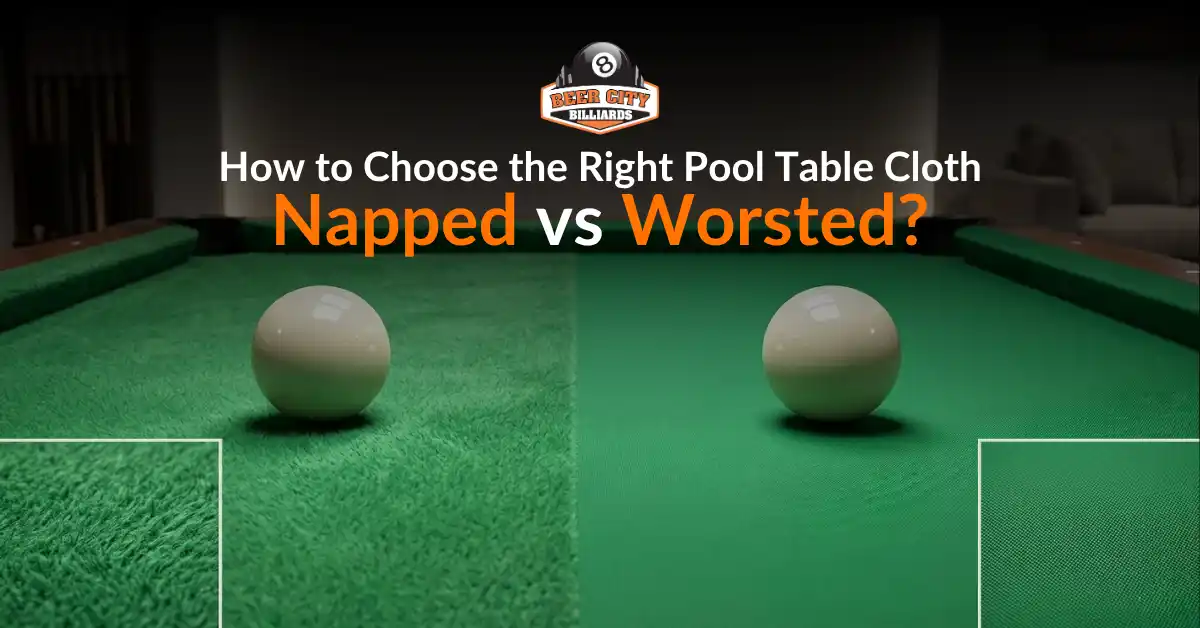
Napped pool table cloth, also known as woolen felt, is the traditional fabric that has been used on billiards tables for over a century. The term napped refers to the fuzzy, raised fibers on the surface of the fabric that create a directional texture similar to velvet or corduroy. These raised fibers, called the nap, are a natural result of the manufacturing process in which wool fibers are woven together and then brushed to create a soft, plush surface. When you run your hand across napped cloth in one direction, it feels smooth, but when you brush it in the opposite direction, you can feel a slight resistance as your fingers catch against the grain of the fibers.
The manufacturing process for napped cloth begins with carding and spinning wool fibers into yarn, which is then woven or knitted into a loose fabric structure. After weaving, the fabric goes through a finishing process called napping, where metal brushes raise the fibers to create the characteristic fuzzy surface. This process creates thousands of tiny fiber ends that stand upright from the base weave, forming a textured layer that interacts with the cue ball as it rolls across the table. The raised fibers create friction, which is the primary reason that napped cloth produces a slower playing surface compared to worsted alternatives.
One of the most important characteristics of napped cloth is its directional nature, often referred to as running with the nap or against the nap. Because the fibers lean in one direction, the cue ball will travel at slightly different speeds depending on whether it is moving with or against the grain. This means a ball rolling from the foot of the table toward the head rail, going with the nap, will move faster and straighter than a ball rolling in the opposite direction, which must push against the raised fibers. Professional players who compete on napped surfaces must develop a keen awareness of nap direction to compensate for these subtle variations in speed and trajectory.
Common brands that manufacture napped cloth include Championship Saturn and Hainsworth Elite, both of which are widely used in homes, bars, and recreational settings. Napped cloth is typically the more affordable option, making it a popular choice for casual players and budget-conscious buyers. The cloth is available in a wide range of colors, with traditional green being the most popular, followed by navy blue, burgundy, and charcoal. The thicker, plush texture of napped cloth also provides excellent sound dampening, which means balls make a softer, quieter impact when they strike the surface, an appreciated feature in home environments.
Worsted pool table cloth represents the premium tier of billiard fabric and is the standard choice for professional tournament play around the world. Unlike napped cloth, worsted fabric is woven from combed wool fibers that have been tightly twisted and woven into a smooth, flat surface with no raised nap whatsoever. The manufacturing process for worsted cloth involves carefully selecting the longest and strongest wool fibers, combing them to remove shorter fibers and align them parallel to one another, then spinning them into a tight, durable yarn. This yarn is woven into an exceptionally dense fabric that has been ironed and compressed to create a surface that is smooth to the touch in every direction.
The absence of a nap is the defining feature of worsted cloth and is the primary reason it delivers a faster, more consistent playing experience. Because there are no raised fibers to create friction or directional resistance, the cue ball travels across worsted cloth at a higher speed and with greater predictability. Every shot plays true regardless of the direction the ball is traveling, which eliminates the need to compensate for nap direction. This consistency is why virtually every major professional billiards organization, including the World Pool Billiard Association and the Billiard Congress of America, specifies worsted cloth for sanctioned tournament play.
Simonis is by far the most recognized and respected brand in the worsted cloth market. Based in Belgium, Simonis has been manufacturing billiard cloth since 1680 and is the exclusive supplier for most professional tournaments worldwide. Their two most popular products are Simonis 860, which is considered the industry standard for pool, and Simonis 760, which has a slightly tighter weave that produces an even faster surface preferred by some professional players. Championship Tour Edition is another excellent worsted option that offers performance comparable to Simonis at a somewhat lower price point. Iwan Simonis 860 uses a unique thread structure that resists pilling and maintains its smooth playing surface for years, even under heavy use.
The smooth surface of worsted cloth also interacts differently with cue chalk. Because there are no fibers to catch and hold chalk particles, less chalk residue accumulates on the playing surface over time. This results in a cleaner appearance and reduced maintenance. However, it also means that the cloth may show chalk marks more visibly in the short term, since the chalk sits on the surface rather than being absorbed into the fibers. Many players consider this a worthwhile trade-off for the superior speed and consistency that worsted cloth provides. The tighter weave of worsted fabric also makes it more resistant to tearing, stretching, and pilling, which translates to a longer useful lifespan compared to napped alternatives.
The most noticeable difference between napped and worsted pool table cloth is the speed at which the cue ball travels across the surface. Worsted cloth consistently delivers a faster playing surface, with the cue ball rolling approximately twenty to thirty percent farther with the same amount of force compared to napped cloth. This speed difference fundamentally changes the way the game is played. On a worsted surface, players must use a softer touch and develop a more delicate feel for distance control. The increased speed also means that balls will rebound off cushions with more energy, creating longer rebound distances that affect safety play and defensive strategies.
Spin response is another critical area where these two cloth types diverge significantly. English, or side spin applied to the cue ball, is more pronounced and predictable on worsted cloth because the smooth surface allows the ball to rotate more freely. On napped cloth, the raised fibers create additional friction that can cause the ball to grab the surface and alter its spin characteristics, sometimes in unexpected ways. This makes certain advanced shots, such as deep draw shots and massé shots, more reliable on worsted surfaces. Professional players who rely on precise spin control for position play almost universally prefer worsted cloth for this reason.
Accuracy and consistency represent perhaps the strongest argument in favor of worsted cloth. Because worsted fabric has no directional nap, the cue ball travels in a perfectly straight line regardless of the shot direction. On napped cloth, even experienced players must account for the subtle deflection that occurs when a ball travels against the grain of the nap. Over the length of a pool table, this deflection can be enough to cause a ball to miss a pocket by a fraction of an inch. For competitive players where every millimeter matters, this consistency is invaluable. The predictable roll of worsted cloth allows players to trust their aim and focus on technique rather than compensating for surface irregularities.
However, it is important to note that the faster speed and increased sensitivity of worsted cloth can actually be a disadvantage for beginners and casual players. Newer players often struggle with distance control on fast surfaces, over-hitting shots and sending balls well past their intended positions. The increased spin response can also magnify mistakes, causing unintentional english to dramatically alter shot outcomes. For this reason, many instructors recommend that beginning players start on napped cloth, where the slower speed provides a wider margin of error and the additional friction helps mask small technical imperfections in their stroke.
When evaluating the long-term value of pool table cloth, durability is a factor that varies significantly between napped and worsted options. Worsted cloth generally offers superior durability due to its tight weave and combed fiber construction. The parallel alignment of fibers in worsted fabric creates a structurally stronger material that resists the formation of pills, those small fuzzy balls of fiber that develop on the surface of lower-quality fabrics over time. Worsted cloth also maintains its tension better over the years, reducing the likelihood of wrinkles, sags, or loose spots that can develop on napped surfaces.
Napped cloth, while initially softer and more forgiving, tends to show wear more quickly in high-traffic areas. The foot spot, where the cue ball is placed for the break shot, is typically the first area to show signs of compression and thinning on napped cloth. The raised fibers also have a tendency to mat down in frequently used areas, creating inconsistent playing characteristics across the surface. In commercial settings such as bars and pool halls, where tables see heavy daily use, napped cloth typically needs to be replaced every two to three years, while worsted cloth can often last five years or more with proper care.
Maintenance routines also differ between the two cloth types. Napped cloth requires regular brushing to maintain the nap direction and prevent the fibers from matting unevenly. The standard practice is to brush the cloth from the head of the table toward the foot rail before each playing session, using a soft-bristled brush specifically designed for billiard cloth. This grooming process is essential for maintaining consistent playing characteristics and should never be skipped. Worsted cloth, in contrast, requires minimal brushing. A light sweep with a clean, dry cloth or a soft brush is usually sufficient to remove dust and chalk residue. The smooth surface of worsted cloth naturally repels debris and does not trap particles the way napped fibers do.
Both cloth types benefit from proper environmental conditions. Humidity control is particularly important, as excessive moisture can cause the cloth to stretch and loosen, while extremely dry conditions can make the fibers brittle and prone to breaking. Keeping the table in a climate-controlled room with consistent temperature and humidity levels will significantly extend the life of any pool table cloth regardless of type. It is also essential to cover the table when not in use, as direct sunlight can cause fading and deterioration of both napped and worsted fabrics over time.
The price difference between napped and worsted pool table cloth is one of the first factors that buyers consider, and it is an important distinction to understand in terms of both upfront cost and long-term value. Napped cloth typically costs between one hundred and two hundred dollars for the fabric alone, making it an accessible option for players on a tight budget. When you factor in professional installation, which is strongly recommended for both cloth types, the total cost for recovering a standard eight-foot table with napped cloth usually falls in the range of three hundred to five hundred dollars, depending on your geographic location and the specific installer you choose.
Worsted cloth commands a significantly higher price, with premium brands like Simonis costing between three hundred and five hundred dollars for the fabric on a standard eight-foot table. Professional installation of worsted cloth typically brings the total cost to between six hundred and one thousand dollars. While this represents a substantial increase over napped cloth, it is important to consider the longer lifespan and superior playing characteristics that worsted cloth provides. When amortized over the expected five to eight year lifespan of quality worsted fabric, the annual cost difference becomes much less significant.
For those who want to understand the complete financial picture of pool table cloth replacement, we have a detailed breakdown that covers every cost factor in our comprehensive guide on the cost to refelt a pool table. This resource walks you through the specific costs associated with different table sizes, regional pricing variations, and the potential savings of a do-it-yourself approach versus professional installation. Whether you are replacing worn-out cloth on an existing table or outfitting a brand-new purchase, understanding the full cost structure will help you budget appropriately and avoid unexpected expenses.
The pool table cloth market is dominated by a handful of established manufacturers, each offering distinct products that cater to different segments of the billiards community. Understanding the strengths and characteristics of each major brand is essential for selecting the right cloth for your specific situation. The reputation and track record of the manufacturer should factor heavily into your decision, as cloth quality can vary dramatically even within the same product category from different producers.
Simonis stands alone as the gold standard in worsted billiard cloth. The Belgian company has been producing cloth for over three centuries and holds patents on weaving techniques that are still used today. Simonis 860 is the most widely used tournament cloth in the world and is characterized by its balanced speed, exceptional durability, and consistent playing surface. Simonis 760, the second most popular option, features a slightly tighter weave that produces approximately ten to fifteen percent more speed than the 860. Both products are made from a blend of wool and nylon, with the nylon providing additional strength and resistance to wear. Simonis cloth is available in over twenty colors, allowing players to match their table cloth to their room decor without compromising on performance.
Championship Billiard Fabrics is the leading American manufacturer and offers products in both napped and worsted categories. Their Saturn line is one of the most popular napped cloths on the market, prized for its rich colors and soft playing surface. Championship Tour Edition, their worsted offering, provides performance that approaches Simonis quality at a more moderate price point. Iwan Simonis remains the top choice for serious competitors, but Championship products are an excellent middle-ground option for players who want better-than-average performance without the premium price tag. Another noteworthy brand is Gorina Basalt, a worsted cloth made from a unique blend that includes basalt fiber for enhanced durability, though it is less widely available than Simonis or Championship.
The interaction between pool table cloth and the accessories you use is a frequently overlooked aspect of table performance that can have a meaningful impact on your playing experience. Cue chalk, cue tips, and even the type of balls you use all interact with the cloth surface in ways that can either enhance or diminish the performance characteristics of your chosen fabric. Understanding these relationships will help you make better choices across all your billiards equipment and get the most out of your table investment.
The relationship between cue chalk and pool table cloth is particularly significant. When you apply chalk to your cue tip before each shot, microscopic particles of chalk transfer to the cue ball and subsequently deposit onto the cloth surface. Over time, this chalk buildup can create a slight roughening of the cloth surface that subtly changes its playing characteristics. On napped cloth, chalk particles tend to embed within the raised fibers, which can actually increase the friction of the surface over time and make the cloth play even slower. On worsted cloth, chalk particles sit on the smooth surface and are more easily brushed away, but they can create visible marks that detract from the appearance of the table. Choosing a high-quality chalk that applies cleanly and evenly can minimize these effects. You can learn more about selecting the right chalk from our detailed guide on the best pool cue chalk available today.
Cue tips are another critical accessory that directly affects how your pool table cloth performs and wears over time. A harder cue tip transfers more energy to the cue ball with less compression, which produces sharper, more precise shots but also concentrates more force on the cloth at the point of impact. Softer tips compress more on contact, spreading the force over a slightly larger area and producing a different feel that some players prefer. The choice of tip hardness also affects how much chalk is picked up and deposited on the cloth, with softer tips generally holding more chalk and potentially leaving more residue on the playing surface. For a thorough comparison of options, our guide to the best pool cue tips covers the full range of products available and helps you match tip selection to your playing style and cloth type.
Ball quality also plays a role in cloth longevity. High-quality phenolic resin balls, such as those made by Aramith, have a smoother surface finish that is gentler on cloth fibers compared to cheaper polyester balls. Over thousands of games, the difference in ball surface texture can meaningfully affect how quickly the cloth shows wear, particularly in high-traffic areas around the foot spot and the head string. Investing in a premium set of balls is a smart move that protects your cloth investment and provides a more consistent playing experience overall.
Proper installation of pool table cloth is just as important as selecting the right fabric. Even the finest Simonis worsted cloth will perform poorly if it is not installed correctly. The installation process requires specialized tools, precise measurements, and a thorough understanding of how the fabric interacts with the slate bed, cushion rails, and pocket openings. While some experienced do-it-yourself enthusiasts attempt to recover their own tables, the vast majority of cloth installations are best left to professional table mechanics who have the expertise and equipment to ensure a flawless result.
The installation process begins with removing the existing cloth and inspecting the slate bed for any damage, cracks, or unevenness. The slate must be perfectly level before new cloth is applied, as even slight variations can cause balls to roll off course. Any seams between multiple slate pieces must be filled and sealed with beeswax or a specialized slate compound to create a perfectly smooth, continuous surface. Once the slate is prepared, the cloth is carefully stretched and stapled to the frame, working from the center outward to ensure even tension across the entire playing surface. The cushion rails are then recovered separately, which requires a different technique to ensure the cloth wraps smoothly around the curved rubber cushion without creating wrinkles or bubbles.
For players who are setting up a new table or relocating an existing one, understanding the complete assembly process is valuable even if you plan to hire a professional for the cloth installation. Our step-by-step guide on how to put a pool table together covers the entire process from start to finish, including detailed instructions for slate leveling, cloth attachment, and rail installation. This resource is especially helpful for anyone who wants to understand what a professional installer should be doing, ensuring you get quality work and can identify any potential issues with the installation.
Choosing between napped and worsted pool table cloth ultimately comes down to a careful evaluation of your personal playing style, skill level, budget, and intended use for the table. There is no single correct answer that applies to every situation, and the best choice for one player may be entirely wrong for another. The key is to honestly assess your needs and make a decision based on the factors that matter most to you rather than simply choosing the most expensive option or following the recommendation of a friend whose situation may be completely different from yours.
For casual home players who enjoy occasional games with family and friends, napped cloth offers an excellent balance of affordability, comfort, and visual appeal. The slower playing surface is more forgiving of technique errors, making the game more enjoyable for players of mixed skill levels. The softer feel and quieter sound of napped cloth also create a more relaxed, social atmosphere that suits a home game room. If your primary goal is to have fun and your table sees moderate use, napped cloth provides a perfectly satisfactory playing experience at a price that will not strain your budget. A quality napped cloth like Championship Saturn will provide years of enjoyable play at a fraction of the cost of a worsted upgrade.
For serious players who practice regularly, compete in leagues or tournaments, or simply demand the best possible playing experience, worsted cloth is the clear choice. The speed, consistency, and precision of a quality worsted surface like Simonis 860 will elevate your game and allow you to develop skills that are simply not possible on an inconsistent napped surface. The investment in worsted cloth also pays dividends in durability, as the fabric will last significantly longer and maintain its playing characteristics over a much longer period. If you are committed to improving your game and take pool seriously as a hobby or competitive pursuit, worsted cloth is an investment that will repay itself many times over in improved performance and enjoyment.
For commercial establishments such as bars, pool halls, and entertainment venues, the decision involves additional considerations related to traffic volume, customer expectations, and maintenance budgets. While napped cloth has a lower upfront cost, its shorter lifespan means more frequent replacements and higher long-term expenses. Worsted cloth, despite its higher initial price, often proves more economical in commercial settings because it withstands heavy use much better and requires less frequent replacement. Many commercial operators also find that customers notice and appreciate the quality of a worsted playing surface, which can differentiate their establishment from competitors and attract more serious players.
The choice between napped and worsted pool table cloth is one of the most consequential decisions you will make as a table owner, and it deserves the same careful consideration you would give to selecting the table itself. Napped cloth offers warmth, affordability, and a forgiving playing surface that is ideal for casual home environments, while worsted cloth delivers the speed, precision, and consistency that serious players demand. Both types have their place in the billiards world, and neither is inherently superior in every situation. The right choice depends entirely on your individual circumstances and priorities.
Regardless of which type you choose, investing in quality cloth from a reputable manufacturer and having it installed by a skilled professional will ensure that you get the best possible performance and longevity from your purchase. Pair your cloth with quality accessories, maintain proper environmental conditions, and follow recommended care procedures to maximize the lifespan of your playing surface. With the right combination of cloth, care, and equipment, your pool table will provide years of enjoyable play and remain a center piece of your game room for decades to come. At Beer City Billiards, we are committed to helping players of all levels make informed decisions about their equipment, and we are always here to answer your questions and provide expert guidance on all things billiards.