
Showing the single result
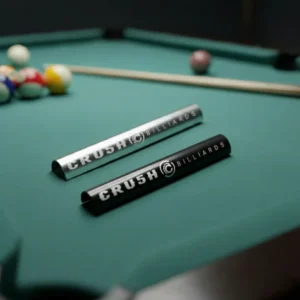
Choosing the right pool cue tip can dramatically improve your control, accuracy, and consistency. Since the cue tip is the only part of your cue that contacts the cue ball, even a small upgrade can make a noticeable difference in your game.
Whether you’re a beginner learning proper English or an experienced player looking for better consistency, the right cue tip helps reduce miscues and improves feel on every shot.
A pool cue tip is the leather tip attached to the end of your cue shaft. It plays a critical role in:
Grip on the cue ball
Spin and English
Shot consistency
Overall feel of your cue
Many factory-installed cue tips are basic and wear down quickly. Replacing them with a quality cue tip is one of the most affordable and effective upgrades a player can make.
Cue tips come in three main hardness levels: soft, medium, and hard. Each offers different benefits depending on your playing style.
Best for:
Beginners
Players learning spin and control
Players who want maximum forgiveness
Benefits:
Better grip on the cue ball
Easier application of English
More forgiving on off-center hits
Things to consider:
Wear out faster
Require more frequent shaping
Soft tips are often considered the best pool cue tips for beginners because they help reduce miscues while building confidence.
Best for:
Intermediate players
League players
Balanced playing styles
Benefits:
Good mix of control and durability
Hold shape longer than soft tips
Consistent feel
Medium tips are the most popular choice among players because they perform well in almost any situation.
Best for:
Advanced players
Players with very consistent strokes
Benefits:
Long-lasting
Minimal maintenance
Firm, crisp hit
Things to consider:
Less grip on the cue ball
Less forgiving
Hard tips are generally not recommended for beginners, as they make spin more difficult and increase the chance of miscues.
If you’re new to the game, we recommend starting with:
Soft or Medium cue tips
Standard sizes (12–13mm)
These tips provide better control, help prevent miscues, and allow you to develop proper technique more easily.
👉 For a full breakdown, read our guide on best pool cue tips.
Most pool cue tips are sized between 12mm and 13mm, which works well for the majority of players.
For best performance:
Keep the tip rounded (nickel-shaped)
Avoid letting the tip become flat or mushroomed
Chalk regularly
Proper shaping and maintenance help extend tip life and maintain consistent contact with the cue ball.
Cue tip lifespan depends on how often you play.
General guidelines:
Casual players: every 9–12 months
Regular players: every 6–9 months
Heavy play: every 3–6 months
You should replace your cue tip if:
It no longer holds chalk
It has flattened or mushroomed
You notice frequent miscues
A fresh cue tip can instantly restore performance.
Many players overlook cue tips and lose performance as a result. Avoid these common mistakes:
Playing with worn-out tips
Using tips that are too hard for your skill level
Never reshaping or maintaining the tip
Choosing the cheapest option without considering quality
A well-maintained cue tip is far more important than most players realize.
To get the best performance from your cue tip, pair it with the right accessories:
Pool Cue Chalk – Improves grip and reduces miscues
Chalk Holders – Keeps chalk accessible during games
Cue Gloves – Helps create a smooth, consistent stroke
These small upgrades work together to improve your overall game.
Upgrading your pool cue tip is one of the easiest ways to improve your performance without buying a new cue. The right tip offers better control, smoother shots, and fewer miscues especially for beginners.
Browse our selection of pool cue tips below to find the right hardness and feel for your playing style.
Choosing the right pool cue tip can dramatically improve your control, accuracy, and consistency. Since the cue tip is the only part of your cue that contacts the cue ball, even a small upgrade can make a noticeable difference in your game.
Whether you’re a beginner learning proper English or an experienced player looking for better consistency, the right cue tip helps reduce miscues and improves feel on every shot.
A pool cue tip is the leather tip attached to the end of your cue shaft. It plays a critical role in:
Grip on the cue ball
Spin and English
Shot consistency
Overall feel of your cue
Many factory-installed cue tips are basic and wear down quickly. Replacing them with a quality cue tip is one of the most affordable and effective upgrades a player can make.
Cue tips come in three main hardness levels: soft, medium, and hard. Each offers different benefits depending on your playing style.
Best for:
Beginners
Players learning spin and control
Players who want maximum forgiveness
Benefits:
Better grip on the cue ball
Easier application of English
More forgiving on off-center hits
Things to consider:
Wear out faster
Require more frequent shaping
Soft tips are often considered the best pool cue tips for beginners because they help reduce miscues while building confidence.
Best for:
Intermediate players
League players
Balanced playing styles
Benefits:
Good mix of control and durability
Hold shape longer than soft tips
Consistent feel
Medium tips are the most popular choice among players because they perform well in almost any situation.
Best for:
Advanced players
Players with very consistent strokes
Benefits:
Long-lasting
Minimal maintenance
Firm, crisp hit
Things to consider:
Less grip on the cue ball
Less forgiving
Hard tips are generally not recommended for beginners, as they make spin more difficult and increase the chance of miscues.
If you’re new to the game, we recommend starting with:
Soft or Medium cue tips
Standard sizes (12–13mm)
These tips provide better control, help prevent miscues, and allow you to develop proper technique more easily.
👉 For a full breakdown, read our guide on best pool cue tips.
Most pool cue tips are sized between 12mm and 13mm, which works well for the majority of players.
For best performance:
Keep the tip rounded (nickel-shaped)
Avoid letting the tip become flat or mushroomed
Chalk regularly
Proper shaping and maintenance help extend tip life and maintain consistent contact with the cue ball.
Cue tip lifespan depends on how often you play.
General guidelines:
Casual players: every 9–12 months
Regular players: every 6–9 months
Heavy play: every 3–6 months
You should replace your cue tip if:
It no longer holds chalk
It has flattened or mushroomed
You notice frequent miscues
A fresh cue tip can instantly restore performance.
Many players overlook cue tips and lose performance as a result. Avoid these common mistakes:
Playing with worn-out tips
Using tips that are too hard for your skill level
Never reshaping or maintaining the tip
Choosing the cheapest option without considering quality
A well-maintained cue tip is far more important than most players realize.
To get the best performance from your cue tip, pair it with the right accessories:
Pool Cue Chalk – Improves grip and reduces miscues
Chalk Holders – Keeps chalk accessible during games
Cue Gloves – Helps create a smooth, consistent stroke
These small upgrades work together to improve your overall game.
Upgrading your pool cue tip is one of the easiest ways to improve your performance without buying a new cue. The right tip offers better control, smoother shots, and fewer miscues especially for beginners.
Browse our selection of pool cue tips below to find the right hardness and feel for your playing style.